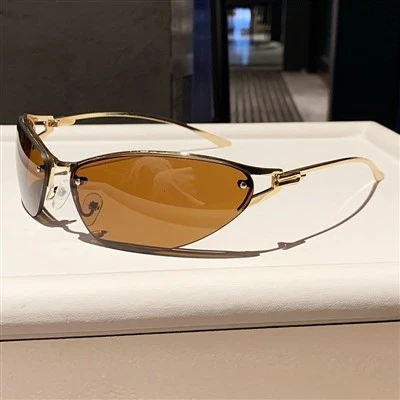

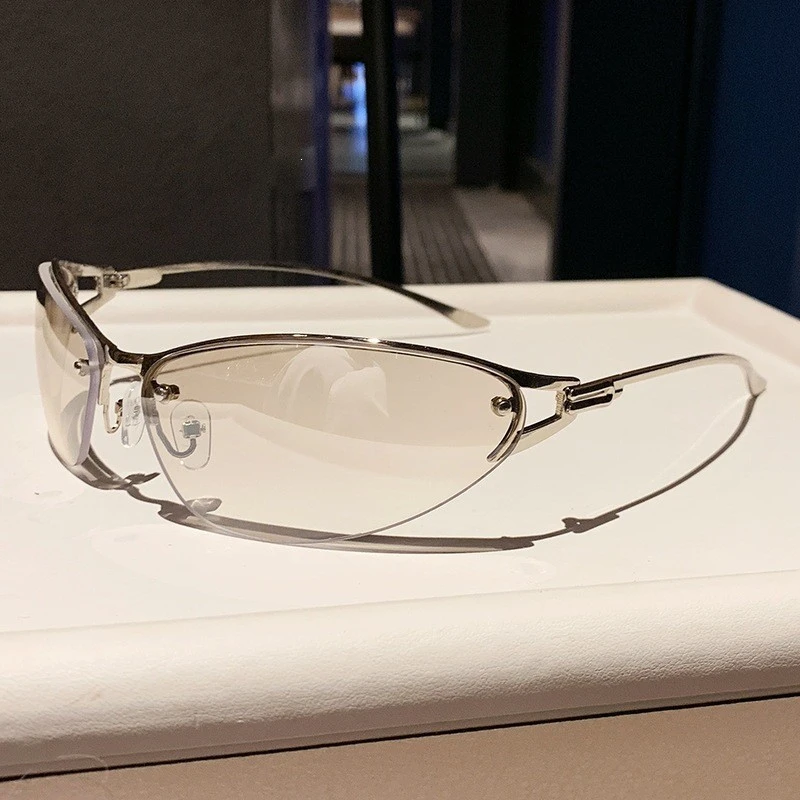
Lightweight semi-rimless eyeglass frames represent a core category within modern optical collections, combining a defined upper frame structure with an exposed lower lens edge. This architecture offers a streamlined, minimalist profile suitable for everyday prescription wear, professional office environments, and contemporary retail portfolios.
Technical Specifications & Parameter Matrix
|
Specification Item |
Standard Production Parameters / Options |
|
Product Type |
Lightweight Semi-Rimless Optical Eyeglass Frames |
|
Primary Structure |
Metal/alloy upper rim, exposed lower lens edge with nylon cord retention |
|
Frame Material Options |
Stainless Steel, Monel, Titanium, or Beta-Titanium (by model specification) |
|
Lens Compatibility |
Prescription optical lenses (CR-39, Polycarbonate, High-Index 1.60 / 1.67 / 1.74) |
|
Surface Finishing |
Vacuum Ion Plating (IP), eco-friendly aqueous coating, anti-scratch lacquer |
|
Hinge Configuration |
Standard 3-barrel/5-barrel hinges or integrated flexible spring hinges |
|
Branding Integration |
Laser engraving, pad printing, or metal badge inlay on temples |
|
Packaging Configuration |
Individual protective polybag, sleeve, hard case, and export-grade carton |
Structural Architecture & Selection Criteria
Upper Rim and Bridge Integrity: Inspect the cross-sectional thickness, bridge geometry, and welding strength at the nose-bridge junction. The upper rim must resist daily facial distortion and maintain frame alignment during routine handling.
Lower Lens-Retention Mechanism: Verify whether the model utilizes a standard nylon cord groove, tension wire, or mechanical locking block. The stability of the lower retention system directly dictates downstream lens-mounting success.
Hinge and Temple Durability: Examine barrel alignment, screw-locking torque, and spring-hinge tension. Temples must withstand repetitive opening and closing cycles without loosening or developing lateral play.
Anatomical Fit Standards: Confirm that pupillary distance (PD), bridge span, and temple length align with target regional anthropometric data for comfortable daily wear.
Weight & Ergonomic Fit Standards
The term "lightweight" must be supported by measurable physical metrics rather than minimalist visual design alone.
Finished Weight Optimization: True lightweight performance is achieved by balancing component wall-thickness optimization with structural reinforcement at stress-bearing joints.
Facial Pressure Distribution: Ergonomic balance relies on correct bridge distribution and temple curvature, preventing localized pressure points on the bridge of the nose or behind the ears during extended wear.
Weighing Calibration: Frame weights should be evaluated both with and without demonstration lenses to establish an accurate baseline for end-user comfort.
Material Options & Manufacturing Considerations
Material selection governs overall frame weight, corrosion resistance, surface finish retention, and final retail price positioning. Multiple metal and alloy compositions are processed for semi-rimless frames:
Stainless Steel: Delivers high tensile strength, enabling thinner profile designs while maintaining structural rigidity around the upper lens perimeter. Excellent base for precision laser cutting and clean geometric lines.
Titanium & Beta-Titanium: Utilized for ultra-lightweight high-end collections. Provides superior strength-to-weight ratio, exceptional corrosion resistance, and hypoallergenic properties for sensitive skin wearers.
Copper-Nickel / Monel Alloys: Cost-effective alternatives providing reliable formability, stable electroplating performance, and consistent batch manufacturing behavior.
Regulatory & Material Compliance
Nickel Release Compliance: Metal components comply with strict nickel-release thresholds (such as EN 16128 standards) to prevent allergic reactions in sensitive wearers.
Chemical & Substance Restrictions: Raw materials and surface coatings conform to regional restricted substance lists, ensuring absence of hazardous heavy metals (e.g., lead, cadmium).
Documentation Support: Material composition sheets and relevant test reports can be requested during the project evaluation phase to satisfy target market regulatory filings.
Custom Design & Engineering Execution
Custom project execution follows structured engineering and manufacturing pathways to translate conceptual designs into finished products:
OEM (Original Equipment Manufacturing):
Production executed strictly according to provided engineering drawings, technical specifications, approved physical reference samples, or brand guidelines.
Feasibility reviews conducted on dimensional tolerances, tooling requirements, and custom hinge integration before mass production commitment.
ODM (Original Design Manufacturing):
Selection from established catalogs of semi-rimless frame designs.
Adaptation of color finishes, temple plating, private-label logos, customized nose pads, and retail packaging assortments.
Quality Control & Inspection Protocols
Consistency across mass production batches is critical for optical frame importers. Factory quality control protocols include checkpoints across key manufacturing stages:
Incoming Material Inspection: Verification of alloy wire composition, thickness tolerances, and surface finish uniformity prior to stamping or cutting.
Component & Assembly Verification: Inspection of bridge symmetry, welding strength, hinge alignment, and screw-locking torque.
Finished Product Audit: Sampling inspection measuring frame dimensions, electroplating adhesion, temple balance, and operational smoothness of hinges against approved master samples.
Packaging Protection: Secure individual packaging designed to prevent frame distortion or surface scratching during international freight transit.
FAQ
Hot Tags: lightweight semi-rimless eyeglass frames, China lightweight semi-rimless eyeglass frames manufacturers, suppliers, factory