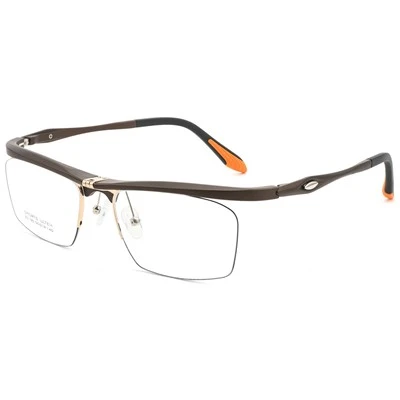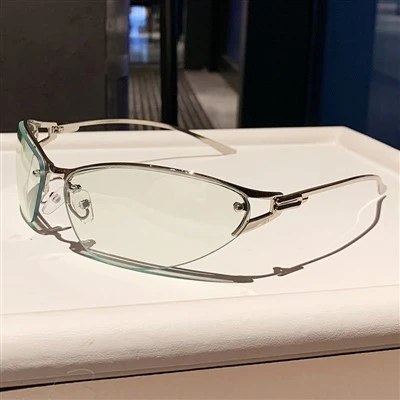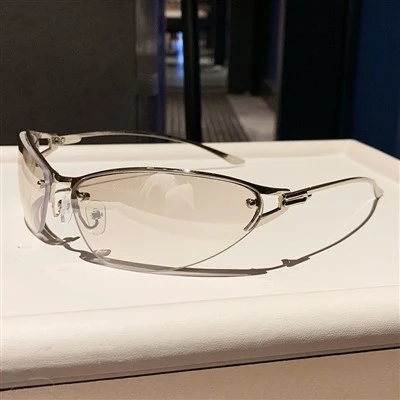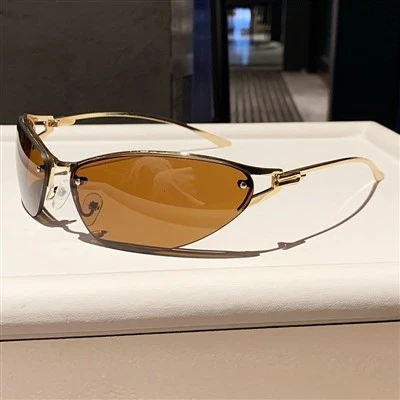


Semi-rimless optical frames combine a partially structured upper rim with an exposed lower lens edge, creating a lighter visual profile compared to full-rim designs. This structure requires precise mechanical engineering to balance lens retention, frame stability, and weight distribution.
Customization & Engineering Parameters
|
Customization Parameter |
Engineering & Technical Scope |
|
Frame Geometry |
Custom lens shapes, bridge drops, brow-line curves, and rim depth. |
|
Material Composition |
Alloy selection, spring-hinge integration, and wire gauge specifications. |
|
Surface Finish |
Glossy polish, matte blasting, laser engraving, or custom plating colors. |
|
Nose Pad Assembly |
Screw-on, push-in, or adjustable pad arm configurations. |
|
Hinge Mechanisms |
Standard barrel hinges, spring hinges, or zero-screw mechanisms. |
|
Laser Marking |
Model numbers, sizing specs, or brand insignia placement on temples. |
Structural Design & Lens Retention Mechanics
The defining characteristic of a semi-rimless frame is its partial frame coverage. Understanding the structural interaction between the frame and the lens is critical for product evaluation.
Upper Rim Support: The upper perimeter-comprising the bridge, brow bar, and top eye wires-carries the primary mechanical stress and houses the hinge attachments.
Lower Lens Retention: The exposed lower edge of the lens is secured by a high-tensile nylon retaining cord fitted into a precision-milled V-groove along the lens edge.
Engineering Considerations: Semi-rimless structures transfer stress directly to the lens edge during impact or adjustment. Lens thickness, bevel angle, and groove depth must match the frame's structural tolerances to prevent lens loosening or cracking.
Key Technical Features & Specifications
Frame Geometry & Proportions
Bridge Design: Fixed or adjustable configurations designed to fit diverse nasal profiles while maintaining central optical alignment.
Eye Size & DBL (Distance Between Lenses): Precise dimensional ratios that dictate overall frame balance and prescription lens blank sizing.
Temple Design: Engineered for weight distribution, grip stability, and correct pantoscopic tilt.
Material Selection & Surface Treatments
Primary Materials: Nickel-silver, stainless steel, or titanium alloys selected for tensile strength and corrosion resistance.
Surface Finishes: Precision polishing, matte brushing, or ionic plating (IP/PVD) to ensure coating durability and uniform color consistency across production batches.
Component Integration: Integrated or screwed hinge barrels, barrel-welding integrity, and medical-grade silicone or PVC nose pads.
Technical Tolerances & Quality Thresholds
Manufacturing consistency relies on strict adherence to dimensional tolerances and mechanical performance thresholds:
Dimensional Symmetry: Frame alignment deviation across the horizontal optical axis must remain within strict micro-tolerances to prevent uneven prescription lens mounting.
Hinge Endurance: Hinge mechanisms must withstand designated opening and closing cycles without loosening or lateral play.
Coating Adhesion: Surface platings undergo standardized tape-adhesion and sweat-resistance checks to evaluate coating stability.
Nose Pad Retention: Attachment points must sustain designated pulling force thresholds to avoid premature detachment during adjustment.
Manufacturing & Quality Control Workflow
Specification Review: Analysis of 2D/3D technical drawings, material sheets, and dimensional tolerances.
Prototyping & Sampling: Producing physical samples to verify fit, structural strength, and lens-mounting compatibility.
Production Run: Machining, welding, surface plating, and assembly executed per approved sample specifications.
Final Inspection: Multi-stage quality control covering dimensional checks, plating durability, and structural stress tests prior to packaging.
Frequently Asked Questions
Hot Tags: custom semi-rimless optical frames, China custom semi-rimless optical frames manufacturers, suppliers, factory